Good Laboratory vs. Great Laboratory: What To Look For In Package Testing Labs
Mark Perkins • February 26, 2026

In regulated industries, many laboratories can generate data. Fewer can generate confidence. The difference between a good laboratory and a great laboratory is not just technical competence - it is consistency, customer partnership, speed, and a relentless focus on quality.


Here is what truly separates the two.


What Makes a Good Laboratory?


  • Performs testing according to established methods
  • Meets basic regulatory requirements
  • Provides accurate and defensible data
  • Delivers results within standard industry timelines
  • Maintains functional communication


Good laboratories do what they are supposed to do.


But great laboratories go far beyond that.


What Makes a Great Laboratory?


  • Is independently accredited (e.g., ISO 17025)
  • Operates with validated systems and documented traceability
  • Prioritizes rapid, reliable turnaround times
  • Proactively communicates with clients
  • Acts as a strategic partner - not just a testing vendor
  • Understands the regulatory impact of every data point


Great laboratories do not just produce results - they reduce risk, accelerate timelines, and create confidence for their customers.


Why Bird Dog Laboratories is a Great Laboratory


ISO 17025 Accredited - The Gold Standard


Bird Dog Laboratories is ISO/IEC 17025 accredited - the internationally recognized standard for laboratory competence.


ISO 17025 accreditation means:


  • Validated and controlled methods
  • Demonstrated technical competency
  • Measurement traceability
  • Strict quality management systems
  • Ongoing external audits


Specialized Expertise in Critical USP Standards


Bird Dog Laboratories focuses on highly specialized and compliance-critical testing, including:


  • USP 671 - Moisture Vapor Transmission for packaging performance
  • USP 661.2 - Plastic Packaging Systems for Pharmaceutical Use
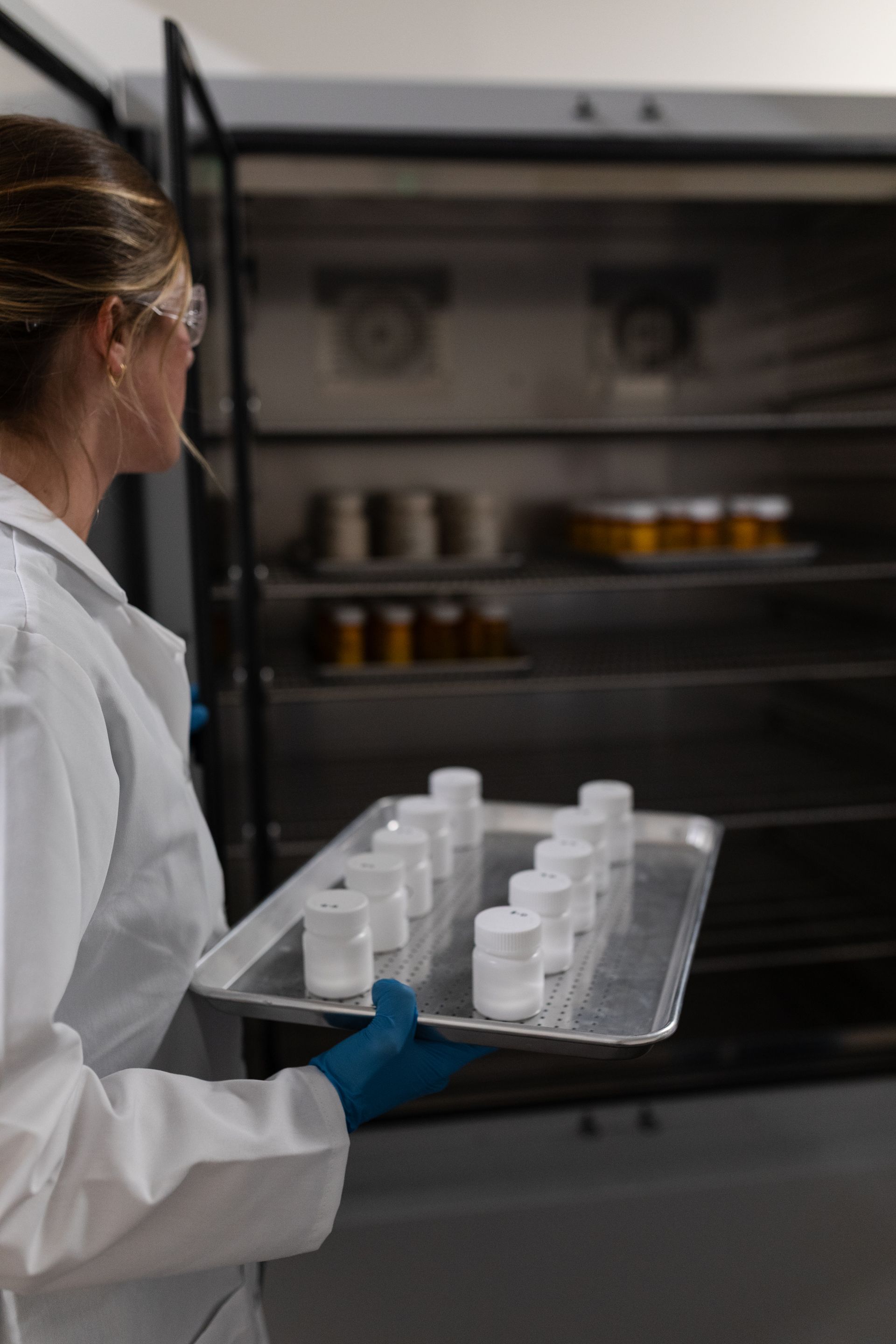
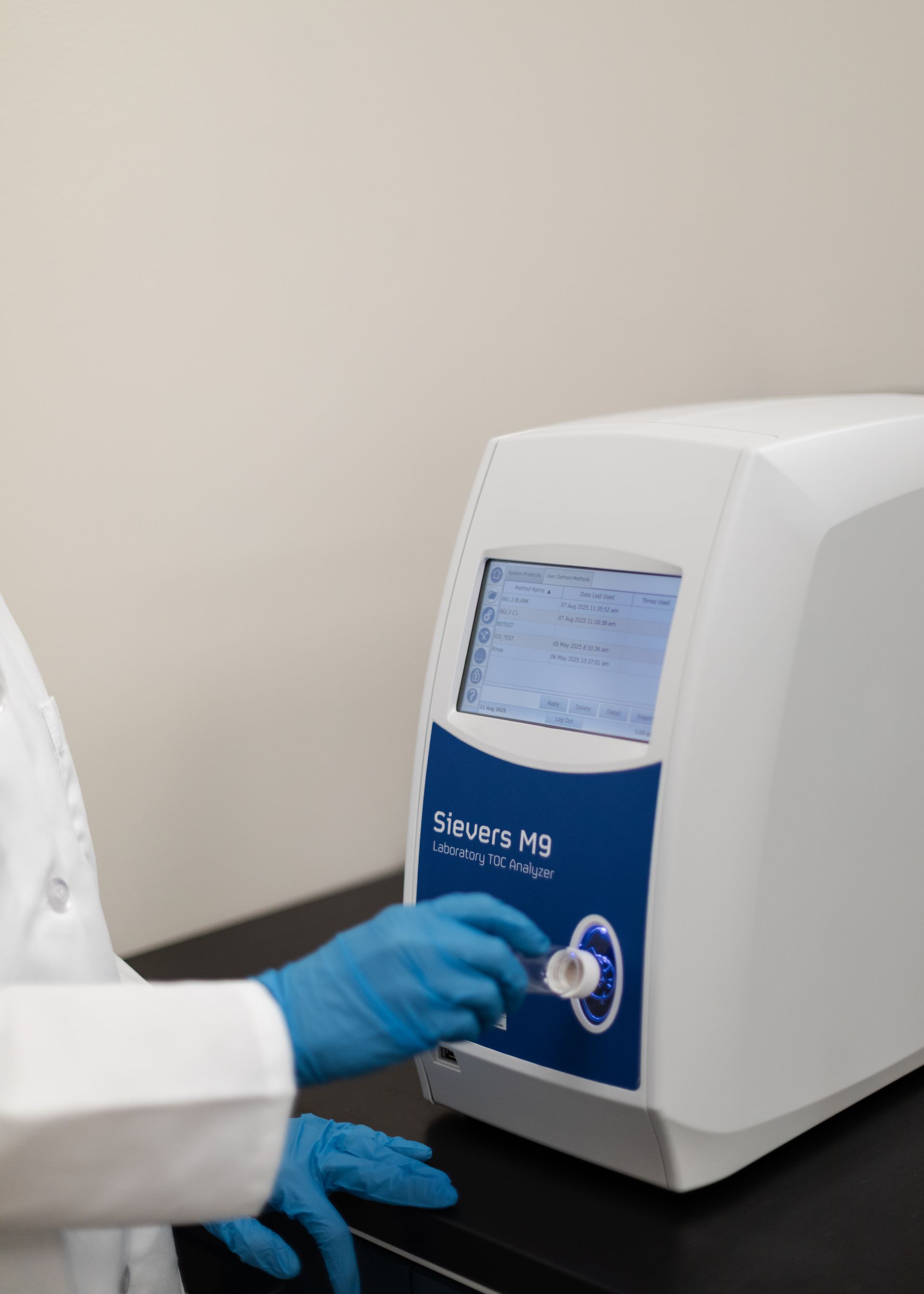
  • USP 643 - Total Organic Carbon (TOC)


These are not routine, commodity tests. They are essential to pharmaceutical and packaging compliance, regulatory submissions, and product stability.


A great laboratory understands the regulatory impact behind each test and Bird Dog Laboratories operates with that awareness every day.


Speed Without Sacrificing Quality


One of the most significant differentiators of a great laboratory is turnaround time.


Bird Dog Laboratories is built around operational efficiency - delivering:


  • Faster scheduling
  • Streamlined sample intake
  • Clear project timelines
  • Proactive communication


In industries where delays can impact production schedules or regulatory submissions, quicker turnaround is not a luxury - it is a competitive advantage.


Advanced Testing Beyond Standard USP Methods


Great laboratories expand their capabilities to solve real-world problems.


Bird Dog Laboratories also provides:


  • Torque degradation studies
  • Back ratchet testing
  • Life cycle studies


These services help manufacturers evaluate packaging integrity, functionality, and long-term performance - reducing field failures and ensuring product reliability.


Rather than simply performing required tests, Bird Dog Laboratories helps clients anticipate risk and design better systems.


Customer Service as a Core Competency


Many laboratories focus solely on data. Bird Dog Laboratories focuses on people.


Our clients' experience:


  • Direct access to technical experts
  • Responsive communication
  • Clear explanations of results
  • Partnership throughout the testing life cycle


A great laboratory understands that behind every sample submission is a regulatory deadline, a product launch, or a business objective.


Bird Dog Laboratories aligns its service with those realities.


The Bottom Line


A good laboratory delivers results.


A great laboratory delivers:


  • Confidence
  • Compliance assurance
  • Speed
  • Expertise
  • Partnership


Bird Dog Laboratories embodies what it means to be a great laboratory: ISO 17025 accredited, technically specialized, customer-focused, and built for efficiency.


In today's regulatory environment, excellence is not optional - it is essential. And great laboratories do not just test products. They protect brands.


If you have any questions regarding your required regulations, call Bird Dog Laboratories at 1-717-615-9022 or email info@birddoglaboratories.com.

Recent Posts
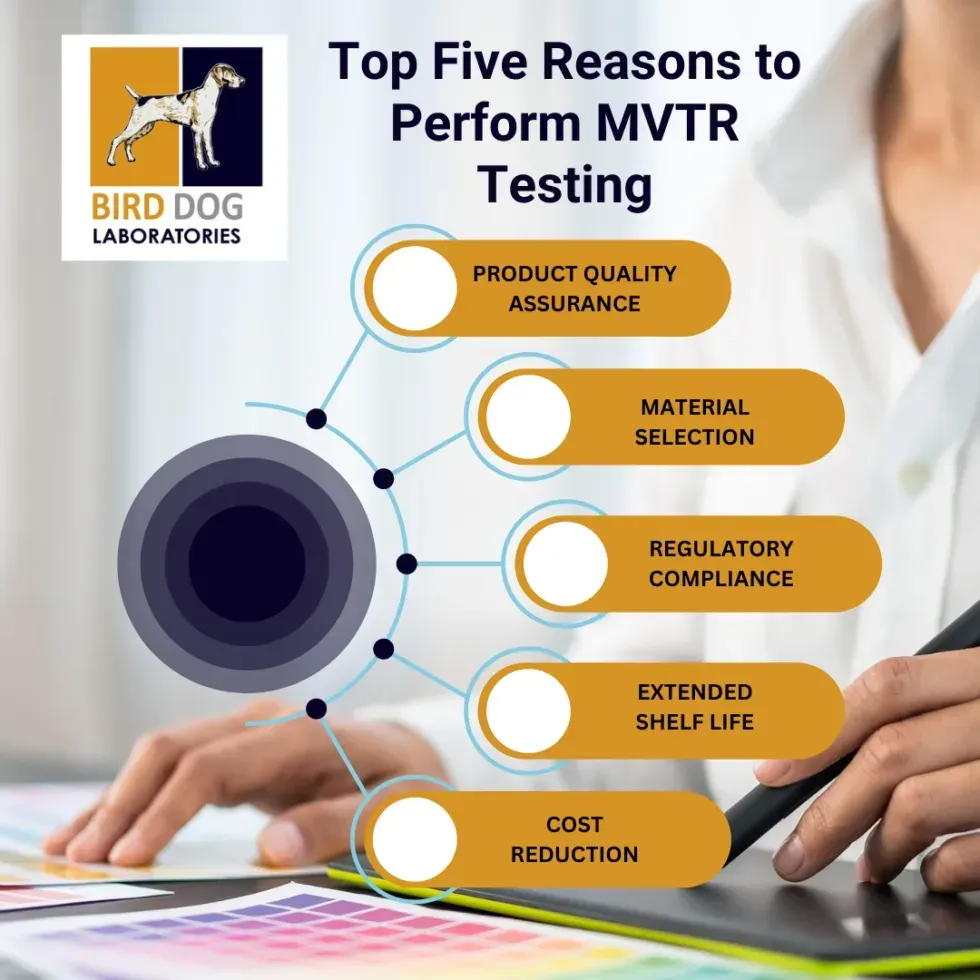
Graphic image highlighting a list of five reasons for MVTR testing.
By Beth Mack July 13, 2026
Need to understand MVTR testing? Explore our guide covering what it is, its core benefits, and the top criteria for choosing a reliable package testing lab.
By Abby Korman July 8, 2026
UV Spectral Transmission Rate Testing - USP <671> and USP <661.2>
By Mark Perkins June 12, 2026
Explore transmission limits, testing methods, and how light-resistant packaging helps safeguard photosensitive drug products.
By Mark Perkins June 8, 2026
Ensuring Product Quality Through USP <671> Testing
By Mark Perkins May 20, 2026
The pharmaceutical industry is entering a new era of regulatory scrutiny when it come to plastic packaging systems used for drug products . With the implementation of USP <661.1> and <661.2> , pharmaceutical companies must demonstrate that their packaging materials and systems are suitable for their intended use and do not compromise product quality or patient safety. In practice, regulatory authorities such as the FDA now expect companies to demonstrate compliance with USP <661.2> when qualifying plastic packaging systems used with drug products. What Is USP <661.2> USP <661.2>, titled "Plastic Packaging Systems for Pharmaceutical Use," establishes requirements for evaluating plastic packaging systems that contain pharmaceutical products. These packaging systems include bottles, containers, closures, unit dose packages and other components that come into direct contact with the drug product. The chapter focuses on ensuring that packaging systems are chemically suitable and safe for drug storage and administration . Unlike USP <661.1> which evaluates the materials of construction , USP <661.2> evaluates the entire packaging system and its interaction with the drug product. FDA Expectations and Regulatory Requirements The U.S. Food and Drug Administration (FDA) require pharmaceutical manufacturers to demonstrate that container closure systems are safe, compatible, and suitable for their intended use under current Good Manufacturing Practices (cGMP). USP standards ae recognized by the FDA as official compendial requirements . As a result, companies must either: Comply with USP <661.2>, or Demonstrate an equivalent scientifically justified approach In regulatory submissions such as NDAs, ANDAs, and BLAs , packaging systems are expected to be supported by extractables, leachables, and physicochemical testing consistent with USP <661.2> requirements. Because of this, USP <661.2> testing has effectively become as regulatory expectation for pharmaceutical companies developing or manufacturing drug products using plastic packaging systems. Why This Standard Matters Packaging is often overlooked in pharmaceutical quality discussions, but it plays a critical role in maintaining product integrity. Plastic packaging components can potentially release chemicals into the drug product through processes such as leaching or migration . USP <661.2> addresses this risk by requiring scientific evaluation of packaging systems to ensure they do not introduce contaminants or alter drug stability. These requirements help manufacturers demonstrate: Chemical compatibility between packaging and drug products Control of extractables and leachables Biological safety of packaging materials Overall suitability of the container closure system Ultimately, these tests protect patients by ensuring that packaging does not compromise drug safety or efficacy. Required Testing Under USP <661.2> To comply with USP <661.2>, pharmaceutical companies typically perform a combination of physicochemical, biological, and extractable studies. Examples of tests include: Physicochemical Tests UV absorbance Acidity/alkalinity Total Organic Carbon (TOC) Solution appearance Transmittance and polymer identification markers Extractables & Leachables Studies Identification of compounds that may migrate from packaging into the drug product Quantification of potential contaminants Biological Reactivity Testing In vitro biological tests to confirm the packaging does not cause harmful biological responses. Regulatory Timeline The revised USP chapters USP <661.1> and <661.2> became official on December 1, 2025 , replacing the older USP <661> standard. These new chapters require separate evaluation of packaging materials and packaging systems to demonstrate suitability for pharmaceutical use. This means pharmaceutical companies must ensure their packaging qualification strategies include both material-level testing and full packaging system evaluation. When Testing Is Required USP <661.2> testing is typically required when: Introducing new packaging systems for drug products Making changes to packaging materials or components Launching new drug formulations or dosage forms Responding to regulatory requests during submissions or inspections In Conclusion: USP <661.2> represents a significant step forward in ensuring the safety of pharmaceutical packaging systems. With FDA expectations aligned with USP compendial standards , pharmaceutical companies must take a proactive approach to packaging qualifications. In today's regulatory landscape, testing plastic packaging systems under USP <661.2> is no longer optional—it is a critical component of regulatory compliance and patient safety. If you have any questions regarding your required regulations, call Bird Dog Laboratories at 717-615-9022 or email info@birddoglaboratories.com .
By Mark Perkins October 3, 2025
Do You Understand USP <661.2> and Why It's Crucial for Packaging in the Pharmaceutical Industry?
Water droplets
By Mark Perkins April 24, 2025
Ensure your container-closure system offers maximum protection. Bird Dog Labs provides accredited moisture, torque, and USP testing for pharma packaging.
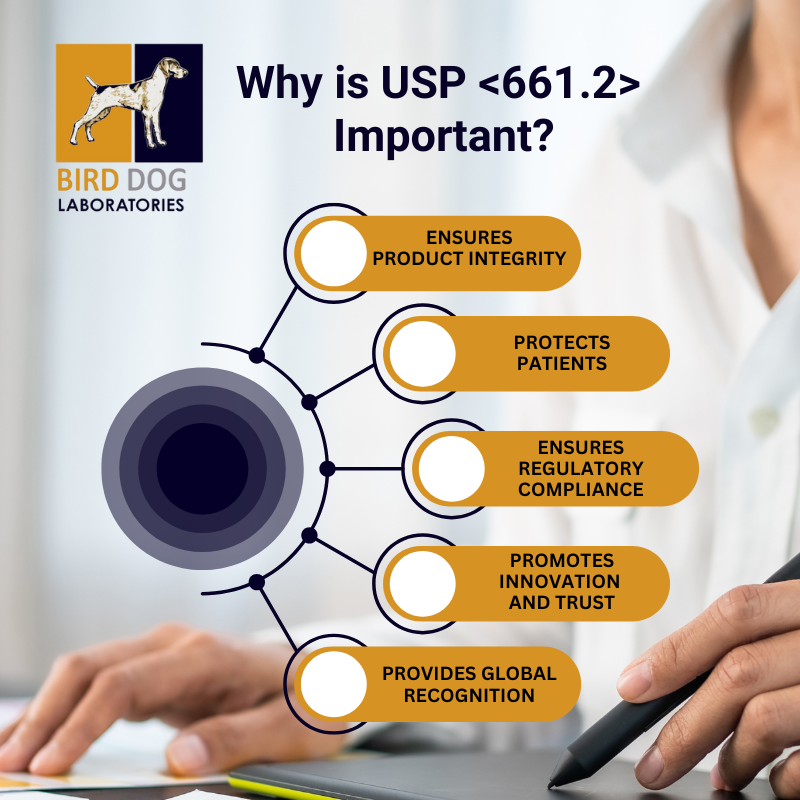
The graphic shows a woman at a desk and a list of important information for USP 661.2
By Mark Perkins March 21, 2025
Why is USP <661.2> So Crucial for Packaging in the Pharmaceutical Industry?
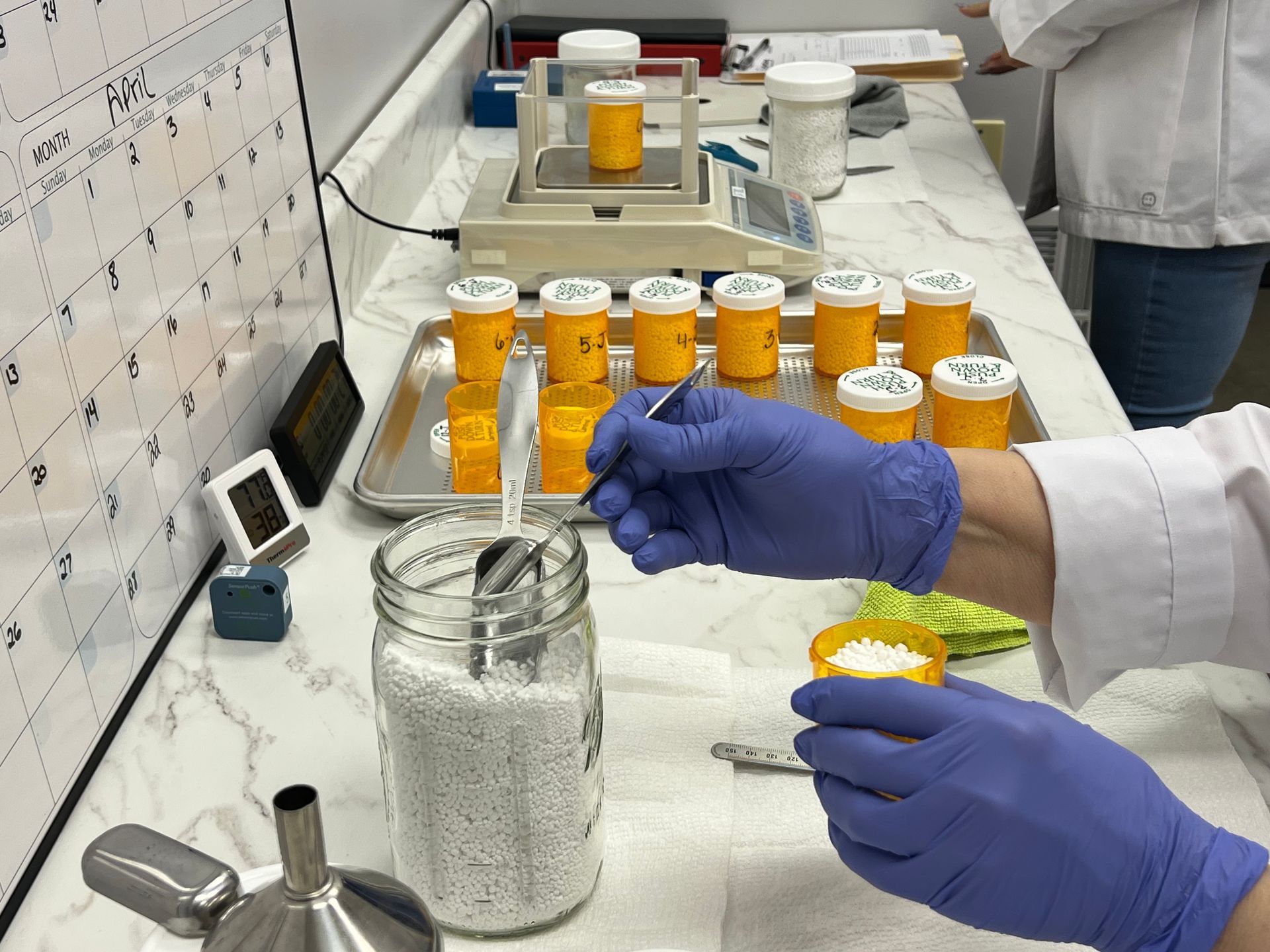
Lab technician's hands in purple gloves scooped glass beads into control samples.
By Beth Mack May 29, 2024
Moisture Vapor Transmission Rate (MVTR) testing is a crucial process that ensures a product’s quality and durability remain intact, even when exposed to various environmental factors. This test is particularly significant in industries such as textiles, packaging, and construction, where the performance of materials under different conditions is paramount. USP 671 is a test that measures the rate at which water passes through material. It ensures materials perform as expected in various environmental conditions. The better the MVTR of a barrier material, the better it prevents moisture ingress. Bird Dog Laboratories, with its team of experienced technicians and specialized equipment, is well-equipped to handle the complex MVTR testing process, instilling confidence in the accuracy and reliability of the results. MVTR Testing results are not just crucial for understanding material behavior in different environmental conditions, but also for ensuring product quality and durability. This testing is valuable at every stage of the design process, from the Unit/Pilot Phase to the finalized production tooling, and even when there are functional changes within the package. Once the testing is complete, Bird Dog Laboratories will prepare a report of the findings and a package classification. The experts at Bird Dog Laboratories are here to help ensure your packaging is ready to take your product to market successfully. Contact Abby Korman, Director of Laboratory Development at akorman@birddoglaboratories.com to learn more about our testing capabilities.
By Beth Mack January 12, 2023
We are excited to welcome Abby Korman to the Bird Dog Laboratories Team as Director of Laboratory Development. Abby’s previous experience as a Product Development Project Manager with Berry Global, Inc. will be invaluable as we grow our package testing capabilities and expand our market penetration. Bird Dog Laboratories is ISO 17025 Accredited to perform USP <671> testing for the functional properties of packaging systems used for pharmaceuticals and dietary supplements. Please contact Abby at akorman@birddoglaboratories.com with questions about your organization’s container performance testing needs and connect with her on LinkedIn .